Philips Senseo Select Eco Review UK 2026
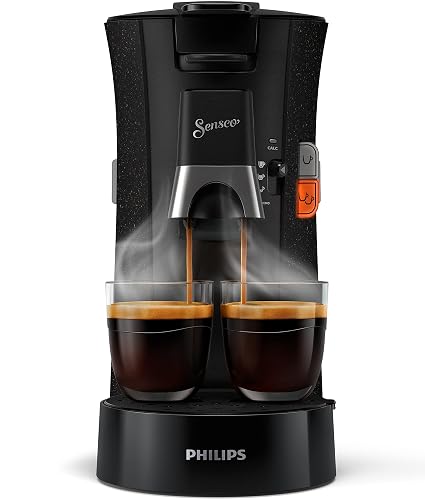
Quick verdict
Score: 8.2/10
Best for: Quick, consistent, mess-free coffee at the push of a button
Not for: Coffee purists who want fresh-ground beans, or anyone wanting the lowest cost per cup
Bottom line: A practical pod coffee machine for fuss-free pod coffee at home.
Overall, the Philips Senseo Select Eco is a straightforward coffee pod machine that suits users who want a compact setup and an easy strength choice, with a 0.9 L water tank and a 1450 W power rating. It fits people seeking a simple daily-cup option rather than complex brewing tweaks. The eco-focused design and memo function support routine use when preferences repeat, while its reliance on coffee pods means variety depends on what pods are available. For many households, it can be a good The Philips machine option, but larger families may find the 0.9 L tank limiting.
Key specifications
| Specification | Value Notes |
|---|---|
| Water tank | 0.9 L Listed |
| Power | 1450 W Listed |
| Dimensions | 31 x 15.5 x 31 cm Listed |
| Colour | Black/speckled Listed |
Pros
- 0.9L tank
- Quick, consistent coffee with no mess or grinding
Cons
- Pods are an ongoing cost and lock you into one system
- Pod systems aren't cross-compatible - no mixing brands of pod
- Less fresh and less customisable than bean-to-cup or ground coffee
Coffee Quality and Pod System
Coffee quality with the pod coffee machine depends largely on its pod system and the way consistently the machine brews within that setup. It uses coffee pods, so flavour strength is linked to the pod type and the machine's strength control. The "Coffee Strength Choice Plus" feature lets users shift intensity by selecting a strength setting, which can suit different preferences. Brewing runs through a single pod pathway, so cup consistency is generally steadier than with open, refillable methods, although results can vary if pods are stored poorly or used after their shelf period.
Milk, Drinks and Versatility
With the pod system already shaping how the machine handles coffee, the next factor for daily use is how it handles milk drinks and how flexible it feels across different drink styles. The Philips is mainly built around pod-based recipes, so milk drinks depend on the selected recipe format and the milk amount added to the cup, rather than manual steam control. For cappuccino or latte styles, the drink outcome is therefore tied to using compatible pod types and pairing them with the right milk measurement. This keeps day-to-day operation straightforward, but it reduces scope for experimentation when milk recipes do not match expectations, as the system limits fine adjustment.
Size, Tank and Ease of Use
Size, tank capacity, and day-to-day handling shape the pod coffee machine. It has a 0.9-litre water tank that is intended to suit regular routines without constant refilling. The machine is 31 x 15.5 x 31 cm, so it can fit most standard kitchen counter spaces, although very tight worktops may feel cramped. Using it involves filling the tank, inserting a compatible coffee pod, and selecting a strength option before starting. The 0.9-litre tank capacity may still require refills if making multiple drinks in succession.
Pod Cost and Availability
Pod cost and availability largely depend on the type of Senseo-compatible coffee pods this pod coffee machine is designed to use. As a coffee pod machine, it relies on pre-packaged pods rather than beans or grounds, so prices can vary by brand, roast, and retailer. Availability is generally strongest for common pod variants, while less common flavours may be harder to find consistently. Branded pods and specific formats can also affect fit, so buyers should check that the coffee pods explicitly state Senseo compatibility before ordering.
Who Is This Pod Coffee Machine For?
This pod coffee machine suits people who want a quick, simple way to make coffee using pre-packaged Senseo-compatible pods, rather than grinding beans or measuring grounds each time. It is a good fit for households or small offices that prioritise a compact footprint, with dimensions of 31 x 15.5 x 31 cm and a 0.9 L water tank. With a 1450 W rating, it is designed to heat efficiently for regular daily use, and the Memo function helps it remember preferences. It is less ideal for anyone who prefers custom blends, because pod choice limits experimentation.
Where to Buy in the UK
Where can a buyer find the Philips Senseo Select Eco in the UK, and what should they check before ordering? They can look at major UK appliance retailers such as Amazon UK, John Lewis, Currys, AO, and Argos, then confirm the exact model code CSA240/20 and colour. Before purchase, they should verify it is the 0.9 L, 1450 W coffee pod machine, and check the listed dimensions, 31 x 15.5 x 31 cm. They should also confirm what is included in the box. Availability can vary by seller, so they should compare delivery estimates and return terms.
Frequently Asked Questions
Is the Philips worth it?
For quick, consistent coffee at the push of a button with no mess, the pod coffee machine is hard to beat. Remember the pods are an ongoing cost. Check the current Amazon UK price, as pod machines go on deal often.
Nespresso, Dolce Gusto or Tassimo - which is best?
Each is a different, non-compatible system: Nespresso focuses on espresso (Original) and longer coffees (Vertuo); Dolce Gusto does a wide range of coffee and milk drinks; Tassimo offers branded drinks like Costa and Cadbury. Choose by the drinks you want and pod price - the machine just follows the system.
How much do the pods cost to run?
Pods typically work out around 30-50p each depending on the system and brand, more than ground coffee but far less than a coffee shop. Nespresso Original and some systems have cheaper compatible pods; factor the ongoing pod cost into your decision, not just the machine price.
How big is the water tank on the Philips?
The pod coffee machine has a 0.9L tank. A bigger tank means fewer refills for households that drink a lot; compact machines use smaller tanks to save space.
Are pod coffee machines worth it over a bean-to-cup?
Pod machines are cheaper to buy, faster, mess-free and need no grinding or cleaning of grounds - ideal for convenience. Bean-to-cup machines make fresher coffee from beans and cost less per cup, but cost far more upfront and need more upkeep. For speed and ease, pods win; for coffee purists, beans do.